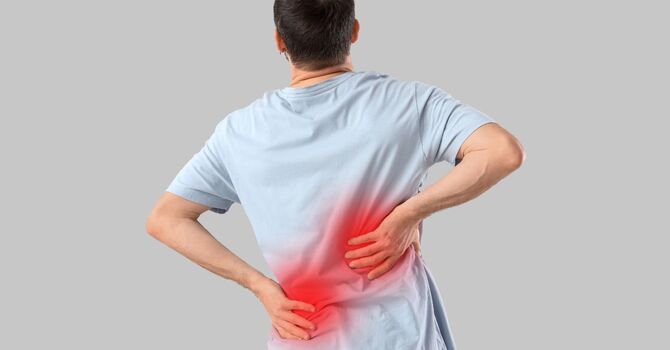
Whether you're a weekend warrior, a competitive athlete, or just someone who trains hard, sports injuries have a frustrating habit of leaving behind tight, guarded muscle tissue long after the original injury has "healed." That lingering tightness can limit your range of motion, sap your power, and quietly set you up for the next injury. This is where dry needling has become one of the most effective tools in a sports physical therapist's kit.
Why Sports Injuries Leave Behind Muscle Knots
When a muscle is strained, overused, or compensating for another injury, it often develops trigger points — small, contracted knots of muscle fiber that don't release on their own. These knots restrict blood flow, limit flexibility, and can refer pain to other areas of the body.
Traditional rest and stretching sometimes aren't enough to reach these deep trigger points, especially in athletes whose muscles are already conditioned to be tight and reactive. That's often why an injury feels "mostly fine" but never quite gets back to 100 percent. You finish physical therapy, the pain has faded, but something still feels restricted or one side just doesn't move like the other. More often than not, that's a trigger point that never fully let go.
This is also why so many athletes get stuck in a frustrating cycle: they rest, the acute pain improves, they return to training, and the same tightness flares up again within a few weeks. Without addressing the underlying trigger point, the muscle keeps defaulting back to its guarded, contracted state under load.
How Dry Needling Speeds Up Recovery
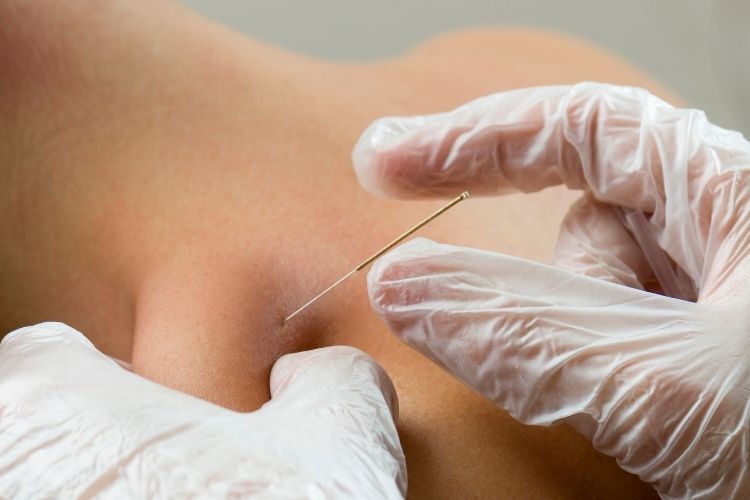
Dry needling uses a thin, sterile needle inserted directly into a trigger point to trigger a local twitch response — essentially forcing the muscle fiber to release its contraction. Research published through the National Institutes of Health has looked at how this twitch response is associated with measurable changes in muscle tissue, including reduced electrical activity in the trigger point and improved local blood flow.
For athletes, that translates directly into function: better range of motion in a shoulder that's been tight since a swimming season, faster return-to-play after a hamstring strain, or relief from the calf tightness that keeps flaring up every training cycle. Dr. Ashton Kirkpatrick, PT, DPT is TDN-certified in trigger point dry needling and brings hands-on sports experience to every session.
Athletes don't always have the luxury of a long, passive recovery window between games or training blocks. Dry needling is valuable precisely because it can be worked into an active training schedule rather than requiring weeks of rest.
Common Sports Injuries That Respond Well
Dry needling tends to work especially well for soft-tissue issues that develop from repetitive movement or overuse, including:
- Hamstring and calf strains
- Shoulder tightness from throwing or swimming sports
- IT band tightness and related knee pain
- Chronic tendinitis that flares during training cycles
- Lower back tightness from repetitive loading
- Hip flexor tightness common in running and field sports
If you've been dealing with any of these and feel like you've plateaued with rest or stretching alone, a trigger point that hasn't fully released is often the missing piece. It's also worth noting that these knots don't always sit exactly where the pain is — a tight hip flexor can refer pain into the lower back, and a locked-up calf can contribute to lingering Achilles discomfort. Part of a thorough evaluation is tracing the pain back to where the tightness is actually originating.
What a Session Looks Like for an Athlete
A dry needling session for a sports injury usually starts with identifying exactly which muscles are compensating or holding tension related to your injury — not just the site of pain, but often surrounding areas that have picked up the slack. Needles are inserted into those trigger points and may be left in place briefly or gently manipulated to encourage the twitch response.
Sessions typically run 15 to 30 minutes and are almost always paired with other physical therapy work — corrective exercise, manual therapy, or a targeted strengthening plan — so the muscle doesn't just release, it stays functional under load once you're back to training. The American Physical Therapy Association notes that dry needling is most effective as part of a broader treatment plan rather than as a standalone intervention, which is why it's rarely used in isolation.
Most athletes feel some mild soreness in the treated area for a day or two afterward — similar to the feeling of a tough training session. This is a normal part of the muscle's response and typically resolves quickly, especially with light movement and hydration.
Dry Needling vs. Rest and Stretching Alone
It's worth being clear about where dry needling fits relative to more conventional recovery approaches. Stretching and foam rolling can help with general muscle tension, but they primarily work on the more superficial layers of tissue and rely on gradual, repeated effort to see change. Dry needling targets the trigger point directly, which is often why athletes notice a change in range of motion or tightness within a single session that would otherwise take weeks of consistent stretching to approach.
That doesn't mean stretching becomes unnecessary — the two work well together. Dry needling releases the trigger point, and the exercises and mobility work that follow help keep the muscle from tightening back up the same way.
Getting Back to Full Speed
Recovery timelines vary depending on the injury, but many athletes notice looser, more responsive muscle tissue within a session or two, with continued improvement as dry needling is paired with a broader rehab plan. It's rarely a standalone fix — it's a tool that helps the rest of your recovery plan work better, and it's often the difference between an injury that keeps nagging and one that actually resolves.
Getting Started in Mount Pleasant
If a nagging sports injury has left behind tightness that just won't quit, dry needling may help you get back on track. At Patriots Point Chiropractic & Physical Therapy, Dr. Kirkpatrick's TDN certification and hands-on collegiate athletics experience mean your recovery plan is built by someone who understands what it takes to get back to training, not just get through the day.
Ready to stop compensating around an old injury? Reach out to our physical therapy team to talk through what's holding your recovery back, and let's build a plan to get you moving at full speed again.
.jpg)